When double glazed windows still get condensation in Wellington
Condensation on double glazed windows can come from damp air in the house, a cold frame or a failed unit, and where the water sits tells you which. Only the last of those means something has broken.
If your windows are still single glazed, you'll find more on double glazed windows for older Wellington homes.
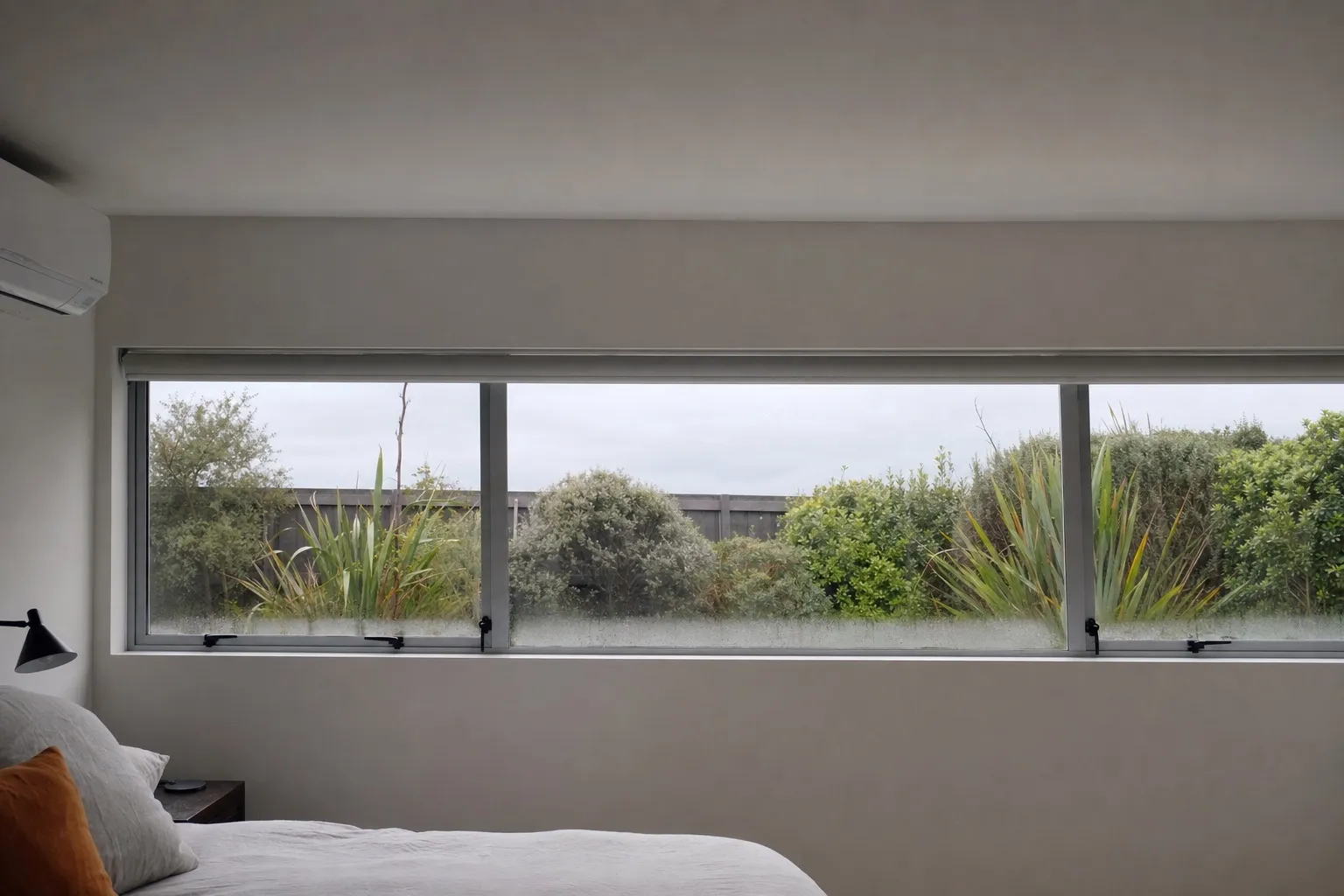
Water on the glass, the frame or inside the unit
Check where the water is before anyone wipes it off.
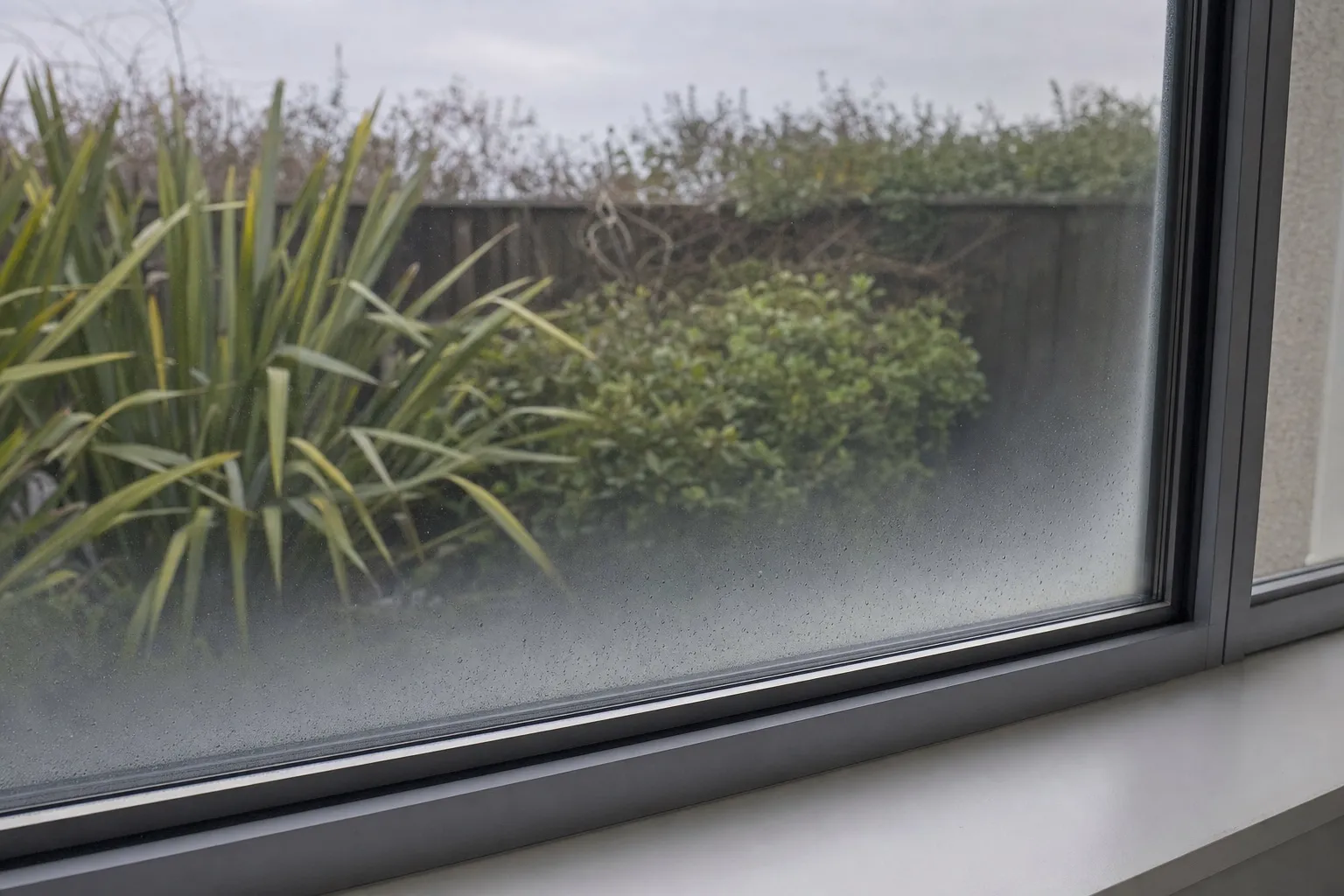
Beads on the room side of the glass
That's moisture from the air inside the house settling on glass that's colder than the room. We couldn't find an official figure for how much difference double glazing makes to it, so we haven't put a number on it.
A wet frame beside drier glass
Here the frame is the cold spot. New glass fitted into an old frame leaves the frame itself as it was.
Fog between the two panes
Fog or droplets you can't wipe away are inside the sealed unit, which means the unit has failed.
Don't drill it. In Lyall Bay, someone who drilled into a fogged unit shattered the pane, then posted a job for a glazier.
Before you pay to have it fixed, check whether the unit is still under warranty. If it went in less than a year ago, go back to the installer.
Ask about a fogged unitWhen the frame is wet, not the glass
If water only turns up after a storm, have the frames checked for leaks before double glazing older aluminium frames.
If it isn't a leak, look at the frame itself. In MBIE's table of window R-values, standard aluminium rates below thermally broken aluminium with the same glass. On a New Zealand forum, one owner with double glazing in standard aluminium frames said the frames still got condensation.
In 2024 a Wellington owner with 1960s aluminium windows found the frames wet with condensation and posted to ask whether they were thermally broken. A retrofit keeps the frame you already have, so if you're not sure about yours, ask the installer to check when they measure. Cold aluminium frames are one of the downsides of double glazing in an older Wellington house.
Windows with standard double glazing
Standard aluminium frameR0.24
Thermally broken aluminium frameR0.30
R-values for the whole window, from MBIE's H1/AS1, 6th edition. A window with a higher R-value loses heat more slowly.
When only the south-facing bedrooms stream
In 2011 a Johnsonville owner whose south-facing bedrooms streamed with condensation asked on a property forum whether to double glaze just those rooms, and in 2026 some installers still pitch south-facing and wind-exposed rooms first. If you're thinking of splitting the work, it's worth knowing what goes into a double glazing price.
If it's only some rooms that stream, say which ones when you send your details.
Ask for a quoteDamp homes across the region, council by council
About one in five homes in the Wellington region was always or sometimes damp at the 2023 Census, much the same as the Auckland region's 20.1%. Mould larger than an A4 sheet was less common here than in Auckland, where 17.4% of homes had it.
Between councils the figures vary much more. Wellington City had the highest damp share and Kāpiti Coast the lowest, while Porirua had the most mould. On both counts, Wellington City, Porirua and Lower Hutt were above the figures for the region, and every other council was below New Zealand's.
Wellington City
Always or sometimes damp
22.9%
Mould larger than A4
16.1%
Porirua
Always or sometimes damp
22.7%
Mould larger than A4
18.0%
Lower Hutt
Always or sometimes damp
21.4%
Mould larger than A4
15.1%
Masterton
Always or sometimes damp
17.2%
Mould larger than A4
11.2%
Upper Hutt
Always or sometimes damp
16.6%
Mould larger than A4
11.7%
Carterton
Always or sometimes damp
13.5%
Mould larger than A4
9.2%
South Wairarapa
Always or sometimes damp
13.3%
Mould larger than A4
8.8%
Kāpiti Coast
Always or sometimes damp
10.8%
Mould larger than A4
8.2%
Wellington region
Always or sometimes damp
19.9%
Mould larger than A4
14.2%
New Zealand
Always or sometimes damp
18.1%
Mould larger than A4
14.0%
Share of homes that were always or sometimes damp, and that had mould larger than an A4 sheet, at the 2023 Census (Stats NZ).
More questions about wet windows
Are homes in the Wellington region the dampest in New Zealand?
No. At the 2023 Census the region had the fifth-highest share of damp homes, behind four regions that include Gisborne and Northland.
Is Wellington's air more humid than Auckland's?
About the same. At Kelburn the 9am humidity averages 83%, against 82% in Auckland and 85% in Christchurch. Of the four stations in NIWA's table for the region, Wallaceville in Upper Hutt has the highest figure, at 84.2%.
Can I ask about one fogged unit rather than the whole house?
Yes. Choose "New glass" on the form, then use the "Anything else" box in step 2 to say how many units have fogged and which rooms they're in. That tells the installer what the job is before they follow up.
Find out whether it's the unit or the frame
Send your details, and a local installer will follow up. A fogged unit and a sweating frame are different problems, so say which one you've got and roughly how many windows it affects.